Studies involving healthy study participants can provide useful information in immuno-oncology
Studies involving healthy study participants can make a valuable contribution to the clinical development of immunotherapeutics in oncology. CHDR aims to use challenge models, such as the KLH neoantigen, to assess drug effects and determine an effective dose in healthy participants.
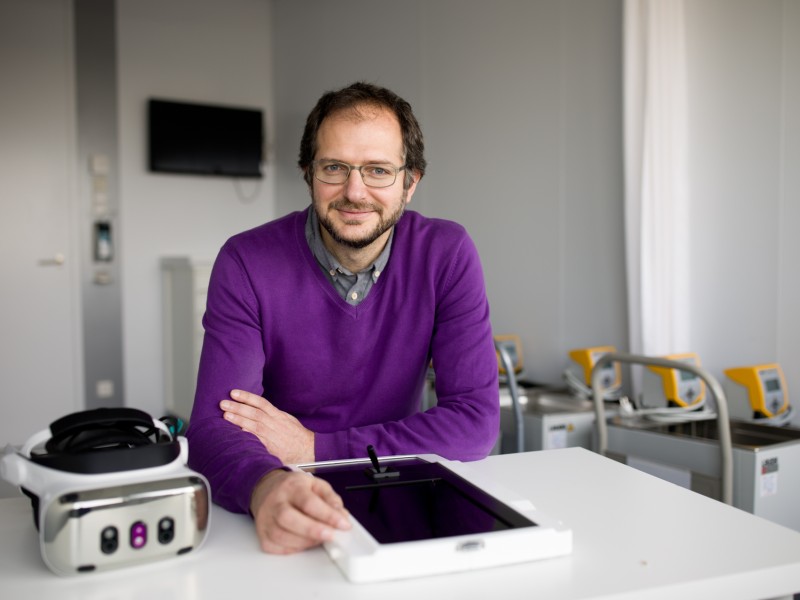
'Many of the new immunotherapeutics targeting cancer focus on cells of the adaptive immune system. Over the past few years, we have gained a lot of experience in measuring immunomodulation in the T- and B-cell compartments of healthy study participants. I’m eager to contribute to immune-oncology drug development, starting with agents that influence lymphocyte function,' says Dr Matthijs Moerland, Research Director R&D Lab and Immunology. In realising this ambition, he can build on the work of Dr Jacobus Bosch, who left CHDR at the end of 2024. Under Bosch’s guidance, for instance, a procedure for bone marrow aspiration in healthy participants was validated, and a study was conducted to investigate the effects of the well-known oncology drug imatinib in healthy study participants.
Measurement of T cell responses
Moerland and his team have extensive experience in assessing immunological drug effects in healthy study participants. The challenge models they developed are now widely used in the evaluation of immunomodulatory drugs for various conditions, including psoriasis and rheumatoid arthritis. ‘Most of the drugs we have studied so far are aimed at inhibiting immune responses and inflammation,’ Moerland explains. ‘However, our models are also suitable for exploring immunotherapeutic agents that aim to enhance immune responses, an area we plan to explore in 2025.’
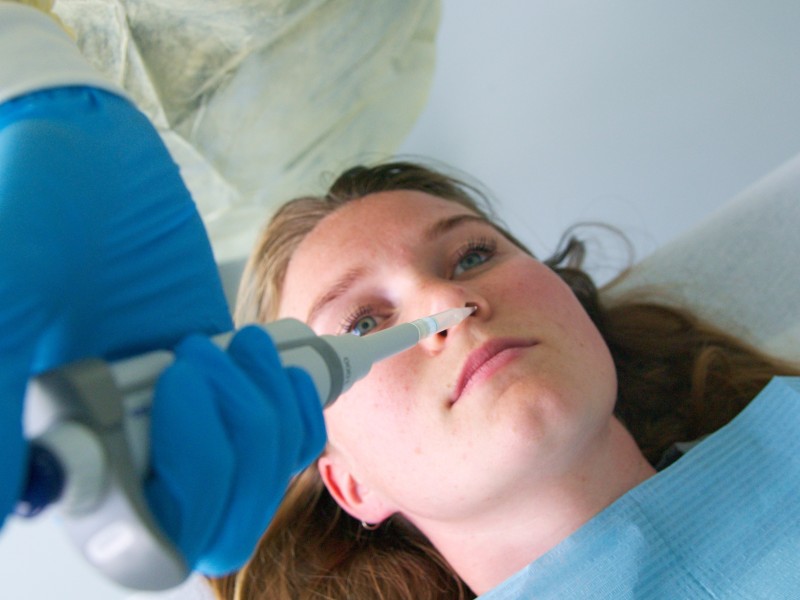
One such challenge model specifically targets T cells by using (re)vaccination with the key limpet haemocyanin (KLH) antigen, to which no human has been previously exposed. The initial KLH vaccination evokes an antigen-specific immune response, and re-exposure triggers another T-cell response. This allows researched to assess the effects of drugs that either reduce or enhance T cell responses. In January 2025, Mahdi Saghari obtained a PhD for his work on developing this model. Meanwhile, Micha Ronner is engaged in follow-up PhD research, further refining the KLH challenge model and its related cellular and molecular pathways. This brings the model closer to application for oncological compounds.
Valuable contribution
In oncology, there is limited tradition of conducting research in healthy study participants due to the high toxicity of traditional chemotherapies. Does CHDR’s approach fill a gap? Moerland: ‘I expect that biotechnology and pharmaceutical companies will increasingly recognize the value of our approach in the coming years. As with other drugs, early-phase drug development in healthy participants can provide deeper insights into pharmacokinetics, optimal dosing, and safety. With our challenge models, you also already obtain useful information about the pharmacodynamics of the compound. You don't have to burden patients with dose-finding studies and you can go into patient studies with more confidence and insight.'
Moerland notes a comparable shift in the clinical development of some other immunomodulatory compounds: ‘For certain autoimmune diseases, compounds are being developed to deplete the body’s lymphocytes. These drugs were once considered too dangerous to test in healthy participants, but over recent years, we’ve seen a trend toward conducting the earliest clinical evaluations in healthy participants, provided safety conditions are met. We are currently launching a sponsored study on B-cell depletion in healthy participants, carefully monitoring their B-cell counts until they reach a predefined minimum level. From there, we will transition to studying rheumatoid arthritis patients, armed with a much better understanding of the compound’s characteristics. This approach provides valuable insights before entering patient studies. I believe it’s only a matter of time before this strategy becomes standard in oncology as well.'
In 2025, CHDR aims to further refine its strategy for early clinical evaluation of oncological compounds. Moerland: ‘Entering a new therapeutic area, especially one as complex as oncology, is challenging and time-consuming. However, we believe CHDR is now well-equipped with unique immune challenge methodologies, a bedside R&D lab for cell-based evaluations, extensive experience in dermal and gynecological malignancies, and a growing collaboration with the Netherlands Cancer Institute,” says Moerland. 'With these resources, we hope our institute will add significant value to future oncology drug research.’
Interested in learning more?
More articles from Developing methods